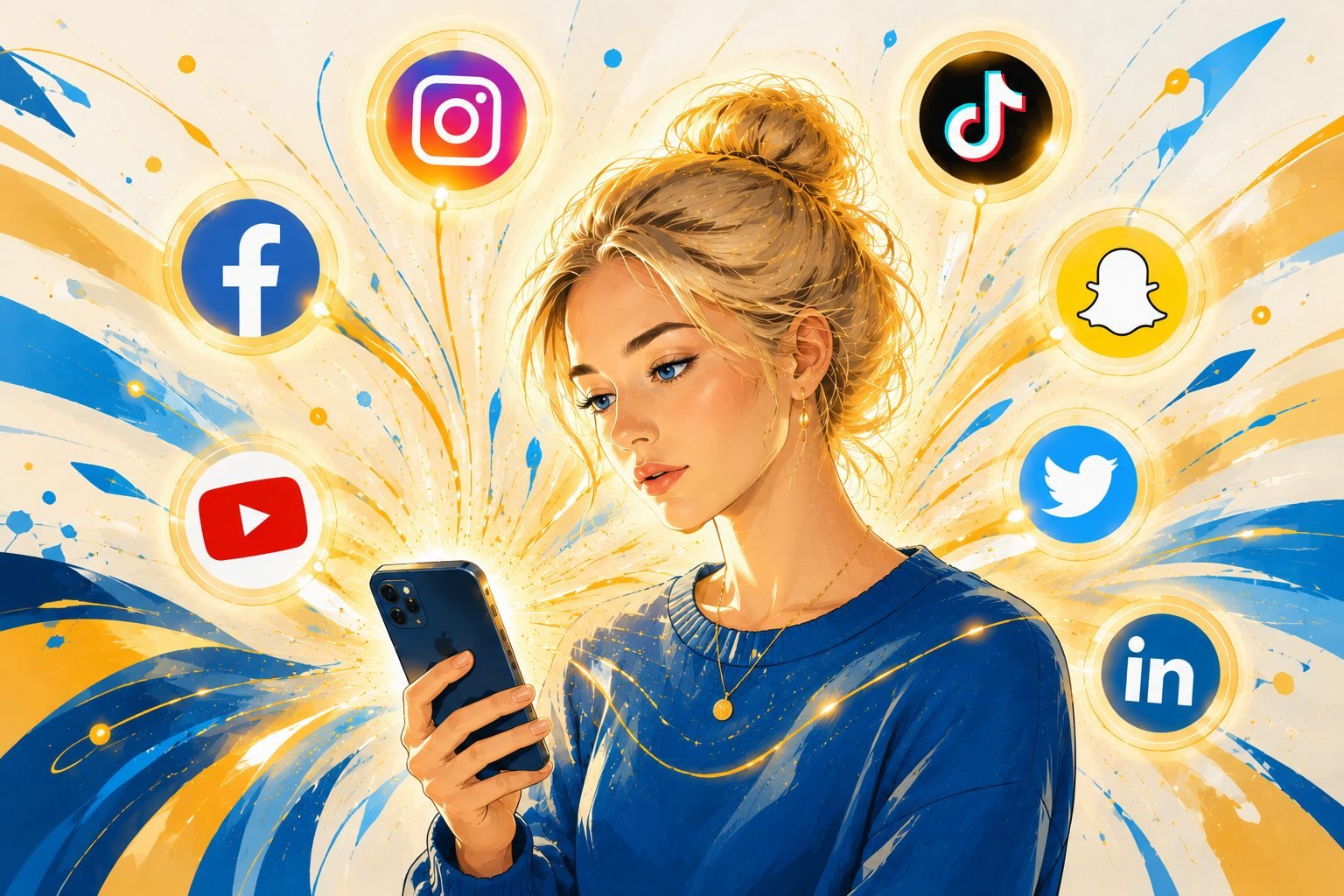
Mirror mirror on the wall…
Taylor Swift, MrBeast, Kylie Jenner, and Erling Haaland Never Did This for You
When you’re sitting at the dinner table and feel the urge to pull out your phone to check on your favorite celebrities, consider this: Taylor Swift USA never changed your diaper, your mother did. MrBeast USA never broke his clay piggy bank to give you $30 for your birthday, your brother did. Kylie Jenner USA never spent two hours in the kitchen cooking your favorite food, your mother did. Erling Haaland Norway never changed a flat tire for you, your father did.
Appreciate the people who live with you. Don’t take them for granted. When they take an interest in what you do, return the gesture. It takes very little effort to ask a question or start a discussion. These are real people, deserving of your time and attention. At my dinner table, phones are not allowed unless it’s an emergency. The twenty minutes you spend with your family and friends should be sacred. Treasure it. There will come a time in your life when you’ll wish you had shown more interest and asked more questions. Don’t let social media replace real connections and values.
Humans are inherently social creatures, built for face-to-face communication and constant action to survive. This natural inclination is evident in our history: we walked together discussing important topics, enjoyed conversations while strolling through a park, worked in tribes, gathered food, built shelters, and protected our communities. These activities required close contact and communication. Today, however, many of us find ourselves isolated, staring at screens rather than making eye contact with those around us.
Instead of giving a hug, a handshake, or a warm, encouraging smile, we often press the “like” button. While this action provides temporary pleasure by releasing oxytocin and dopamine, it will never replace the evolutionary driving forces that make us human. Social media, with its countless advantages, should be used as a tool rather than a relationship substitution device.
Remember, social media engineers are the same people who design gambling machines to be addictive. A genuine smile, a warm hug, or an uplifting conversation is still worth more than 100 likes on your Instagram post. Even if you have 1000 likes, the idea remains the same. Cherish those who changed your diaper, cooked your food, sacrificed their piggy bank, and changed your tire. They are your family and friends, they are real people.
What Meaningful Connections on Social Media Actually Look Like
The engineers who designed these platforms to be addictive weren’t wrong about the mechanism. They just assumed the only thing worth extracting was attention. Two weeks ago, I watched twenty-five adults prove that assumption wrong, and prove that meaningful connections social media makes possible are still very real.
They started writing. Blog posts about human relationships. About the tendency to self-sabotage, and how to stop. About what real business communication actually sounds like, versus the version everyone was taught. About the simple act of learning to enjoy writing again. The classroom was electrified, not because I told a good story, but because every one of them realized the same platform that had been quietly mining their attention for years could just as easily carry their ideas out into the world.
Now they’re publishing on Substack, by the dozens. Not for likes. For an audience, a voice, and in more than a few cases, the beginning of an actual income.
That’s the answer to the dinner table, I think. Not “put the phone away forever,” but “know exactly what you’re using it for.” A like button is a transaction with no memory. A published idea, read by a stranger who needed to hear it, is something else entirely. That’s the real case for meaningful connections social media can create instead of replace. My students didn’t need me to lecture them about addictive design. They needed one push toward asking the question I keep asking myself: how do you turn the problem into the solution? Twenty-five people just answered that question in real time, and the answer is still being written.
Where to Put That Intention: A Platform-by-Platform Guide
Best used for visual storytelling and community, not just scrolling. Follow accounts that teach you something, comment with real thoughts instead of emojis, and mute anything that only makes you compare yourself to a highlight reel.
Visit Instagram →Still one of the best places to keep real relationships warm across distance, groups, family updates, community events. The trap is the endless feed. The value is in the people you already know, not the algorithm’s suggestions.
Visit Facebook →TikTok
Powerful for learning in small bites and finding niche communities fast. Set a time limit before you open it, not after. The app is built to make “just five more minutes” nearly impossible to keep.
Visit TikTok →YouTube
The closest thing to a free education most people will ever have access to. Subscribe intentionally, search for what you need to learn, and treat the autoplay queue as something to turn off, not follow.
Visit YouTube →Genuinely useful for professional networking and sharing real expertise, which is rare among these platforms. Post what you actually know, engage with people doing real work, and skip the manufactured “inspiration” posts.
Visit LinkedIn →Snapchat
Built for quick, low-pressure check-ins with people you’re already close to. Best used the way it was intended, a moment shared with a specific person, not a public performance for a wide audience.
Visit Snapchat →Substack
The one platform on this list built around depth instead of speed. No algorithm deciding who sees your words, no character limit forcing a thought into a fragment. This is where my class turned scrolling into something that pays.
Visit Substack →Meaningful connections social media can support instead of replace: what a 2022 essay about phones at the dinner table got right, what it missed, and what changed when a room full of adults picked the same tool back up on purpose.
A like fades in a second. A comment lives on and helps this moment spread across the globe.
Tell us what it meant to you ↓





This one really resonated with me, especially because I remember you talking about this in class. Looking back, I don’t think we fully realized at the time just how much you were changing our perspective, not only on social media but also on what it means to have something meaningful to say. You taught us to look beyond the likes, the views, and the numbers and recognize that our voices have value even before an audience finds them. For me, that shift was huge. Starting to publish my writing on Substack and LinkedIn wasn’t about chasing an audience. It was about finally giving my ideas, experiences, and creativity somewhere to exist outside of my own head, and I think that is what makes this post so powerful. You didn’t just teach us how to communicate professionally or how to use AI and technology effectively. You encouraged us to actually communicate; to write, to think, to question, to connect, and to put our own voices into the world. You’ve genuinely changed the way I look at these platforms, and, more importantly, the way I look at my own voice. What started as a classroom exercise became something much bigger for me: a creative outlet, a way to connect with people, and potentially even the beginning of something I can build into an income. You make an amazing teacher because you don’t just teach information; you make people see possibilities they hadn’t considered before. Thank you for this post, and thank you for helping us realize that sometimes the most valuable thing we can put into the world isn’t a perfect post or viral idea. It’s simply our own voice. ❤️
Sarah, thank you so much for your reply and your comment. Very few people take the time and the effort to create a comment like yours and show appreciation for the content. That’s the currency of social media. Valuable, well thought out, and authentic comments that shows the world the you care about what you read. I hope your example will how others how to communicate in a meaningful way and how to show that you value the content. This post came from a place of frustration, when I saw someone at the dinner table, scrolling on their phone, instead of making an effort and show interest in the people around the table. I truly appreciate your awesome comment! Thank you so much! More posts to come, relating to this one. Stay awesome!