
Three Moments That Shaped the Teaching
A rocky coastline in Bulgaria, a $40,000 mistake, and a night in New Jersey that put me in the top 2% — three stories, one thread: discipline built one repetition at a time.
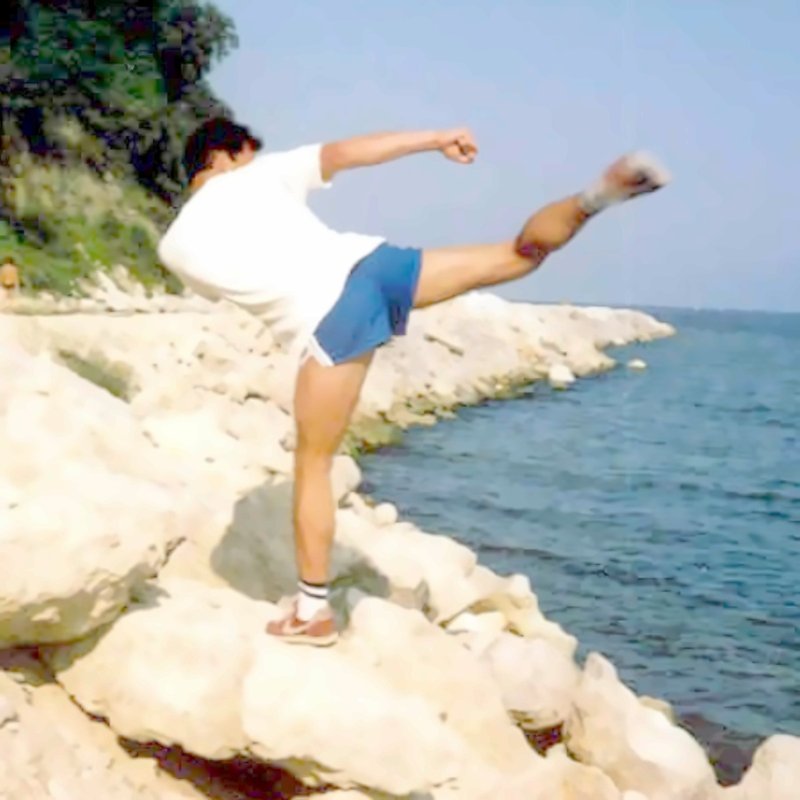
From Roundhouse Kicks to Excel Formulas
Years of Kyokushin karate in Hungary taught me that mastery is never one big leap — it’s the same kick, the same IF function, thrown a thousand times until it’s instinct. This is the story of how a dojo in Eger still shapes every class I teach.
Read the storyThe $40,000 File Extension
One wrong file extension. One panicked phone call. One lesson no textbook ever taught me — but every student since has heard about it. Watch the moment that turned a costly mistake into the story I tell on day one.
Read the full story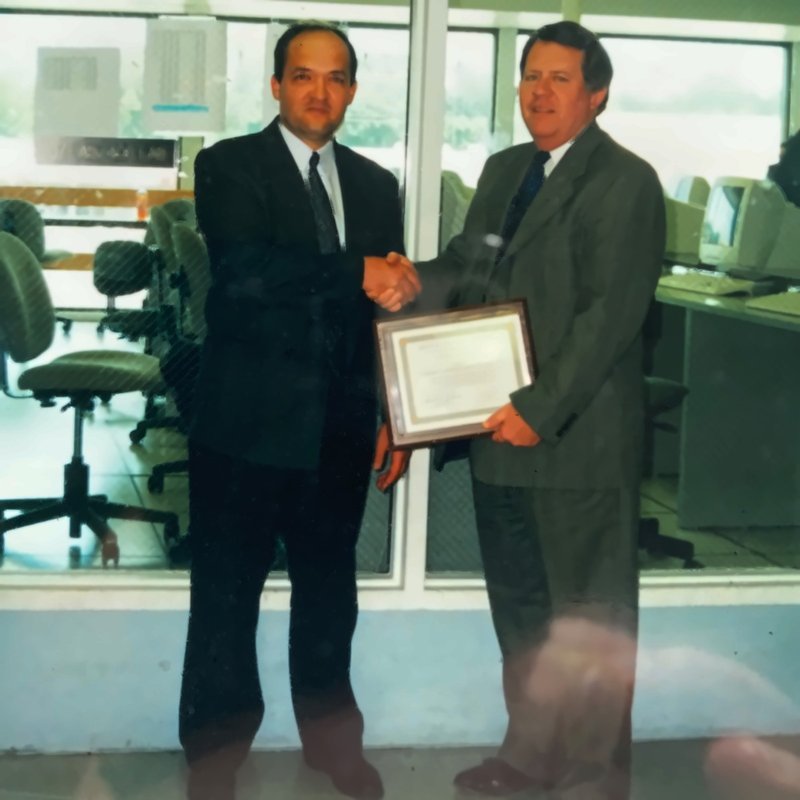
Top 2% of Instructors in North America
After a year-long evaluation of nearly 2,000 teachers, this handshake marked the moment the work got noticed. Meet the educator behind 7,000+ students trained — and the philosophy that got us here.
Meet the instructorA Legacy Document · Attila Farkas · OfficeShortcuts.com
What Seven Thousand Students Know
A thirty-year record of what happens when a teacher decides the person in front of him is the actual subject.
The #5 is much too small a number. Attila would definitely have to be over a 10.
The Flood
It was September 23, 1924. The Neva River had been rising for hours.
In a research compound on the outskirts of Petrograd, Ivan Pavlov’s dogs were locked in their cages as floodwater crept under the doors. These were not ordinary animals. They were years into one of the most famous behavioural experiments in scientific history, trained to respond to signals with clockwork precision. They had learned. They knew things.
And now, in the dark, in the cold, the water kept rising.
By the time the assistants waded in to rescue them, some of the dogs had been moments from drowning. They were pulled out alive. Physically unharmed. But something had happened inside them.
In the days that followed, Pavlov noticed the dogs had forgotten. Not everything, but the carefully built patterns of behaviour, the conditioned responses that had taken months to establish, were gone. Erased. As though the terror had reached into their minds and quietly cleared the shelves.
He tried everything to restore what had been lost. Nothing worked reliably until he discovered something so simple it bordered on obvious. When a researcher simply stayed in the room with a dog during testing, the animal recovered. The conditioned responses returned. The moment the researcher left, they vanished again.
The cure for what the flood had done was not medication. Not time. Not a programme or a protocol.
It was a person. Present. Consistent. Trustworthy.
Pavlov had not set out to study trauma. He had set out to study digestion. But on that September morning in 1924, the river gave him something far more important: proof that extreme fear dismantles what learning has built, and that human presence is what rebuilds it.
The Box of Tissues
Nearly a century later, a woman walked into a bookkeeping class in Ontario carrying a box of tissues.
Not a travel pack. A full box, the kind infused with cream, chosen for a long and difficult ordeal. Her name was Chelsea. She had taken bookkeeping before, at another college. She knew, with the certainty of someone who has already been through the flood, exactly what was coming.
She was not being dramatic. She was being practical. She had packed for the experience she expected.
“You helped me not only overcome my fear of bookkeeping, but you helped me excel.”
She set the box on her desk. The class began. Her teacher noticed it. He told her she wouldn’t need it. Not the way people say don’t worry, dismissively, reflexively, without meaning it. He said it the way someone says something true.
She didn’t need it.
Chelsea was not the only one. Over the years, dozens of students arrived from that same college carrying invisible versions of that same box. Some carried it from other schools. Some from home. From childhoods that had taught them, through cruelty, neglect, or relentless failure, that certain rooms were not safe for them. That certain subjects would expose them.
They arrived not as students. As people braced for impact.
What they found instead was a teacher who understood something about fear that most educators are never taught: that a person who is frightened cannot learn. Not because they lack ability, but because the flood has already come. The shelves have been cleared. Until someone trustworthy stays in the room, nothing new will stick.
What Fear Does
This is not a metaphor. This is neuroscience.
When a person has been humiliated in a classroom (laughed at, dismissed, failed publicly, taught by someone who confused confusion with stupidity) the brain files that experience under threat. Not under school. Not under math or bookkeeping or computers. Under threat.
And when they walk into a new classroom, the brain does what brains are designed to do: it scans for the same threat. It finds familiar furniture. A whiteboard. Rows of desks. A teacher at the front. And it says: last time you were here, something bad happened.
That quiet, constant alarm consumes the cognitive resources that learning requires. It is like trying to read a book during a fire drill.
This is what Chelsea walked in with. This is what thousands of adult students carry back to school with them. It is what no curriculum, no textbook, no innovative teaching technology has ever been designed to address, because it is invisible, and because most institutions do not know it exists.
Some teachers know. Not because they studied it. Because they felt it in the room, and they stayed anyway, and they watched what happened next.
Thirty Years in the Room
Attila Farkas escaped Hungary in 1986 with a biology degree, a second language, and the particular clarity that comes from having once had very little to lose.
He began teaching in New Jersey, where Computer Learning Centers recognized him in the top 2% of computer instructors in North America. He trained approximately three thousand students there before relocating to Ontario, Canada, where he spent the next two decades teaching Microsoft Office, bookkeeping, and career skills to adults who were starting over.
Many of those students did not arrive as students in the conventional sense. They arrived as people who had been through something: domestic abuse, psychological manipulation, prolonged unemployment, poverty, illness. Some had been failed so thoroughly by previous teachers, by institutions, by the people who were supposed to protect them, that they had accepted failure as a personal characteristic rather than a circumstantial one.
Attila did not treat this as a special problem requiring a special programme. He treated it as the actual job.
“I find that he has a calming effect on the class when we are having a problem with a certain topic.”
The student who wrote that had no way of knowing she was describing the precise mechanism Pavlov had identified: the fastest, most reliable path to cognitive recovery from stress. She only knew how the room felt.
In total: more than thirty years. More than seven thousand students. Three countries. One consistent outcome.
The Record
Handwritten cards, institutional evaluations, and digital messages, from 1996 to the present day.
Not only did we learn, but you gave us hope and confidence in ourselves, which was gone or damaged. I achieved my dream. A huge thank you.
Susan HodgsonIf you have the opportunity to have Attila Farkas as a teacher, you cannot fail.
Sarah JenkinsAttila genuinely cares about the people he teaches and sees them as people, not just students or numbers.
Sarah MuellerI truly wish there were more Attilas out there.
Tracey CrosbyYour spirit shines. And because of that, my passion to act has surpassed my expectations.
Leon, handwritten cardWho knows what I could have accomplished if I had had you in high school?
Marnie NewberyAlways prepared and enthusiastic. We will all miss him.
Student evaluation, c. 1996Made it fun to be here, not boring at ALL!!
Student evaluation, c. 1996The #5 is much too small a number to describe him. He has made an impact on my learning skills as well as my listening skills. He’s a great teacher and a wonderful person. Attila would definitely have to be over a 10.
Student evaluation, Computer Learning Centers, c. 1996You made my return to school after so many years fun, interesting, and fulfilling.
Claus, handwritten cardThank you for helping us grow.
Multiple students, group cardYou’re an amazing teacher and don’t ever change.
Michelle, handwritten cardSeven thousand students across three countries and thirty years, and still counting.
Not a statistic. A record of individual people who arrived carrying something heavy and left carrying something different.
12 Tips for Teachers Who Want to Change Lives, Not Damage Them
Practical wisdom from 30 years and 7,000 students. Share freely.
“The most important thing you bring into any room is your genuine belief that the people in front of you are capable of more than they know.”
Attila Farkas · #InvisibleThreads · #TeachWithHeartWhat This Means for You
If you are a student who has been told, by a grade, by a teacher, by your own voice, that you are not capable of learning something, this record was assembled for you. It is evidence that the problem was not you.
If you are a teacher reading this, you already know what room we are describing. You have felt it. You have either stayed in it or you have left. There is still time to stay.
If you are an administrator or a decision-maker, you have in your power the ability to put more people like this in front of students who need them. The research is a century old. The results are not complicated.
If you are a parent, know this: one teacher can undo what years of wrong rooms have built. It happens. It is documented. It is reproducible. It requires only that someone decide the person in front of them is the actual subject.
Thirty years. Seven thousand students. One consistent outcome.